
Which vegetation is suitable for steep slopes?
Which vegetation is suitable for steep slopes?
Steep slopes are sensitive to erosion, dehydration, and soil washout. The right vegetation helps protect the soil and stabilize the slope in the long term. But which grasses and plants are suitable for this?
The best choice depends on the slope angle, soil type, amount of sunlight, and moisture. The purpose of the slope also plays a role: a roadside requires a different approach than a ditch bank or a natural incline.
Which grasses are suitable for slopes?
For slopes, grass species that develop a dense root system and are suitable for local conditions are often used.
When choosing a grass seed mixture, several properties are important:
Root development: a well-developed root system helps hold the soil together. Fast establishment: the sooner the vegetation develops, the sooner the soil surface is protected. Drought tolerance: especially important for steep slopes that receive a lot of sun. Traffic and maintenance: for roadsides and public areas, it can be important that the vegetation can withstand certain forms of load.
Depending on the conditions, red fescue, Kentucky bluegrass, and perennial ryegrass, among others, can be applied. The suitable combination differs per location and intended use.
When to choose wildflowers or natural vegetation?
Not every slope needs to have a tightly mown lawn. In ecological projects, a mixture of grasses and native wildflowers can actually be more attractive.
A wildflower-rich mixture can contribute to biodiversity and provide food for insects. The composition must, however, align with the soil, moisture, and desired management.
On dry slopes, different species may be suitable than on moist ditch banks. A mixture that performs well on a sunny slope is therefore not automatically suitable for a wet, shaded location.
How do you prevent erosion on a steep slope?
Even the right vegetation needs time to establish itself. Especially in the first weeks after sowing, the soil surface can be vulnerable to rain and runoff.
Good soil preparation and the right sowing method are therefore essential.
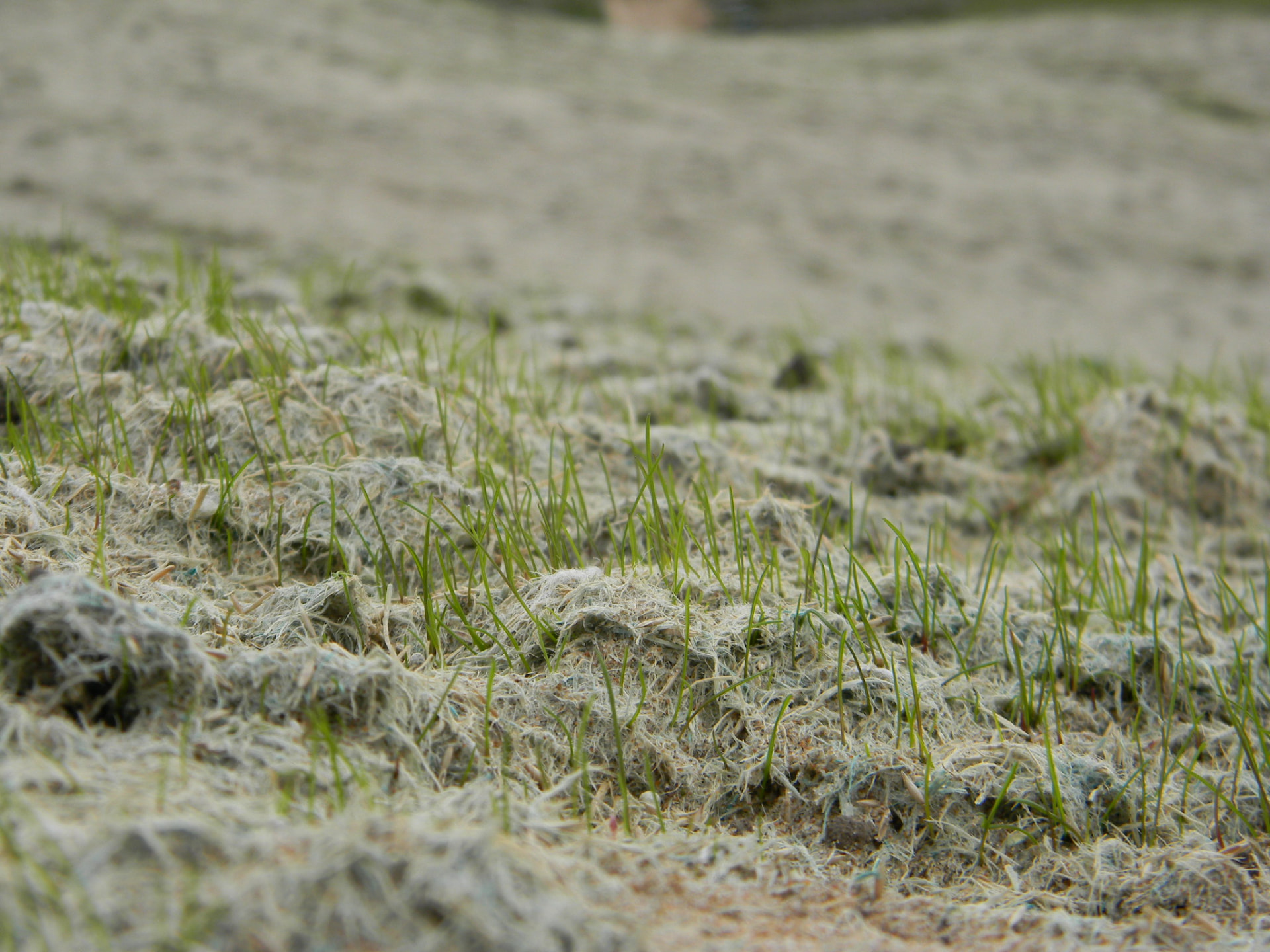
With hydroseeding, a mixture of water, grass seed, and mulch fibers is sprayed onto the soil. Depending on the conditions, fertilizers and a tackifier can also be added.
The mulch helps keep the seed in place and protects the soil surface against the direct impact of raindrops. As a result, hydroseeding can be a suitable solution for slopes that are difficult to reach with traditional sowing machines.
For steep or highly erosion-prone slopes, additional erosion protection may be necessary.
Hydroseeding for slopes and verges
Hydroseeding is suitable for various projects, including roadsides, dikes, slopes, and landscaped grounds.
The composition of the mixture can be tailored to the location and the desired vegetation. For example, a suitable grass seed mixture or a combination of grasses and herbs can be chosen.
Gazonic helps with the professional sowing of slopes and other terrains where an efficient approach is desired.
Do you want to sow a slope and are you unsure about the right vegetation or sowing method? Contact Gazonic to discuss the possibilities for your project.