
Sustainable solutions for soil erosion
Sustainable solutions for soil erosion
Soil erosion poses a challenge for infrastructural projects, landscape development, and nature restoration throughout Europe. Heavy rainfall, strong winds, prolonged drought, and human activities can cause fertile soil to be lost and surfaces to lose their stability. The risk of soil erosion is particularly significant on embankments, roadside verges, construction sites, and large open surfaces.
Preventing erosion requires effective solutions that not only protect the soil but also contribute to long-term vegetation restoration. Techniques such as hydroseeding and hydromulching offer interesting possibilities for this.
What causes soil erosion?
Soil erosion occurs when soil particles are displaced by water or wind. During heavy rainfall, surface water runoff can carry away large quantities of soil. This risk is especially present on slopes and embankments where little to no vegetation grows.
Construction activities, deforestation, earthworks, and prolonged drought can also make the soil more vulnerable. Without sufficient ground cover, the natural protection that vegetation provides against erosion is missing.
Hydroseeding as a solution for erosion control
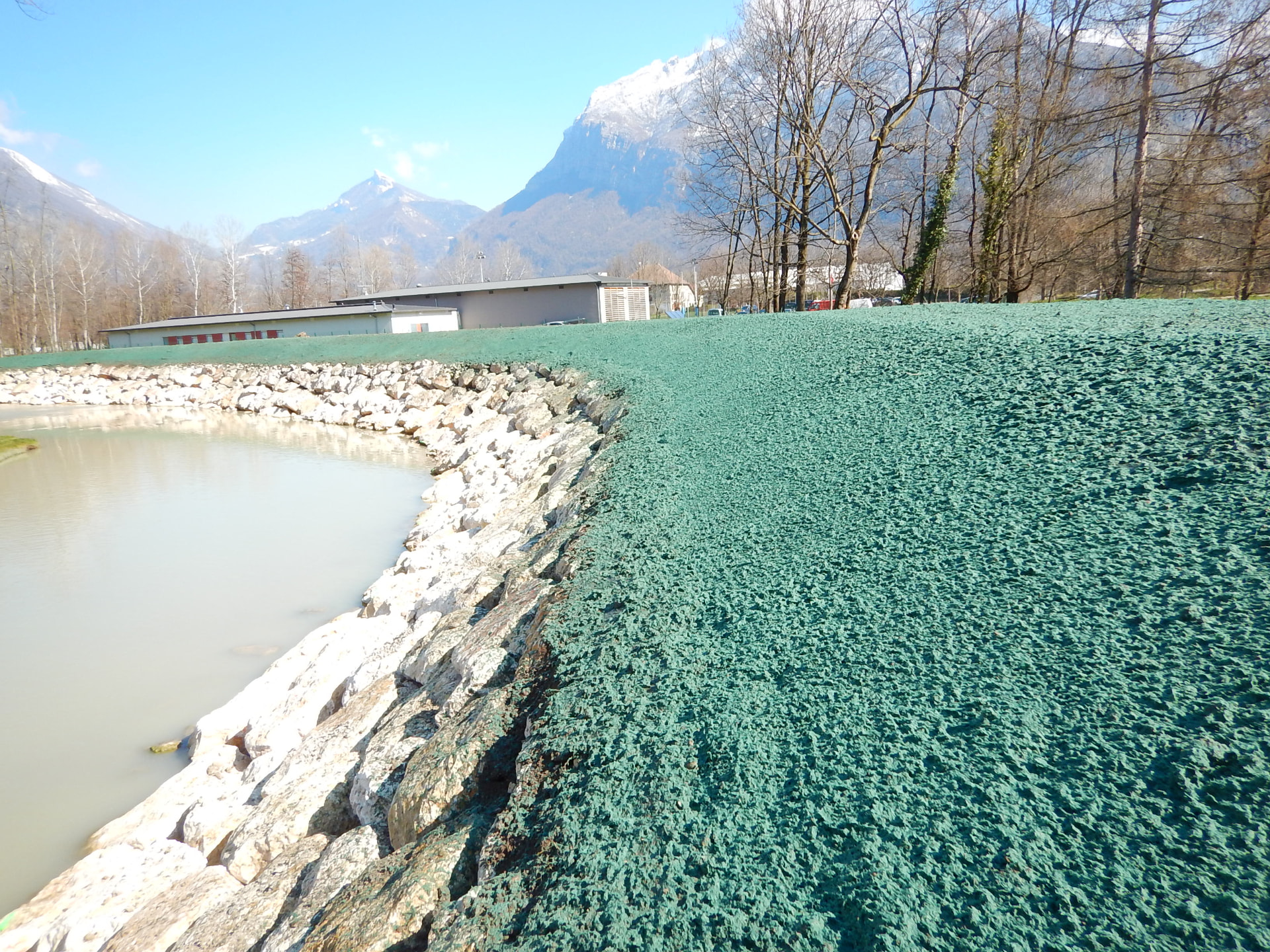
Hydroseeding is a hydraulic seeding technique in which grass seed, water, mulch, binder, fertilizers, and any soil improvers are mixed into a homogeneous slurry. Using specialized machinery, this mixture is applied evenly over the soil surface.
The mulch layer helps retain moisture and protects the seed during the initial growth phase. Once the vegetation develops, the roots contribute to the stability of the upper soil layer.
Hydroseeding is particularly suitable for large-scale applications, including:
• Embankments along roads and highways. • Railway verges and infrastructure zones. • Construction sites and earthwork projects. • Industrial sites and mining. • Landscape development and nature restoration.
Hydromulching for extra soil protection
In addition to hydroseeding, hydromulching offers possibilities for surface erosion control. This involves applying a mixture of water, mulch, and binders to temporarily protect the soil against weather influences.
The mulch layer helps reduce the impact of raindrops, limits moisture loss, and can better hold soil particles at the surface.
Depending on the soil condition, slope angle, and erosion risk, a choice can be made for hydroseeding, hydromulching, or a combination of both techniques.
Erosion control under different European conditions
The conditions for vegetation development vary greatly within Europe. While Southern European areas deal with high temperatures and prolonged drought, Northern and Central European areas may face intensive rainfall, varying temperatures, and seasonal growth periods.
A successful approach, therefore, begins with assessing the local soil condition, climate, and desired vegetation. The choice of suitable seed mixtures, mulch composition, and the correct application timing are decisive for the result.
Especially for large infrastructure projects, a project-oriented approach is important to limit erosion and develop a sustainable vegetation layer.
Gazonic offers specialized hydroseeding and hydromulching solutions for projects where large-scale vegetation development and erosion control are central.
We focus on collaborations with contractors, infrastructure companies, project developers, and landscape architects. From roadside verges and embankments to railway zones and large surfaces for landscape restoration: every application requires an appropriate approach.
Hydroseeding and hydromulching can make an important contribution to protecting the soil and developing sustainable vegetation.
Looking for a specialized partner for erosion control or large-scale hydroseeding? Contact Gazonic and discover the possibilities for your project.